Last week, I received a note from a local TV news viewer who called a television news story “blatant copaganda” and “a glorified ad.”
The term “copaganda” is used by media critics to describe content that serves as good public relations for police, thus the variation on “propaganda.”
The news story aired on April 15 on FOX59. Reporter Rafael Sánchez described a ride-along with the Johnson County Sheriff’s Office as they conducted a massive drug raid, making 23 arrests. Included in that story was reporting Sánchez did while he was hosting a breakfast fundraiser for the addiction recovery nonprofit Overdose Lifeline.
This was not an egregious mistake, but I have some recommendations.
In their email to me, with the subject line: “FOX59 doing blatant Copaganda,” the viewer wrote:
FOX59 did a coordinated photo-op with the JCSO (Johnson County Sheriff’s Office) to basically make a promotional video for the war on drugs. They even managed to work in an Overdose Lifeline event the reporter emcee’d (but never mentioned his personal connection to). This was a glorified ad.
This viewer did not respond to my additional questions via email, so I do not know how they knew Sánchez was the emcee for the fundraiser.
I spoke with the reporter and his news director to better understand how these two different events – the sheriff’s department drug raids and the nonprofit fundraiser – ended up as fodder for a single story. I also spoke with a Poynter Institute broadcast faculty member about best practices in local television. After close examination, I believe that this viewer’s perception of a conflict of interest could have been avoided with a simple on-air disclosure that the reporter had hosted the fundraiser he mentioned in his story.
TV news personalities frequently appear at community events. It’s part of the job. Not only does it advance the brand recognition for the station, but it’s also a way for journalists to be involved in the communities they serve. And that’s certainly the case with Sánchez and FOX59. The reporter told me that he does between 60 and 80 non-political events every year.
“We encourage our on-air talent to participate in as many things in the community as possible,” said CJ Hoyt, FOX59 news director. “We live here, we work here, we’re part of these communities. We have talent involved in dozens and dozens of organizations every year. We think it’s important. We think we’re not doing our job if we’re not involved in these community events.”
Sánchez was not paid to emcee the Overdose Lifeline breakfast fundraiser, nor was the station paid for his services. Nexstar, FOX59’s parent company, has strict policies to avoid conflicts of interests and any sort of pay-for-play relationships, Hoyt said. The station has no policies restricting reporters from covering an event or charity for which they made an appearance, because they don’t see any conflict there, Hoyt said.
Sánchez’s news story opens with footage of Johnson County SWAT Team members in military gear, surrounding a home in Amity. Over a loud speaker, a voice instructs people inside to come out with their hands up. Sánchez explains that the raid was one of dozens made by law enforcement across four counties. He interviews the Johnson County Sheriff and a deputy who describe their efforts to stop those selling drugs and also to get support for people who are struggling with addiction.
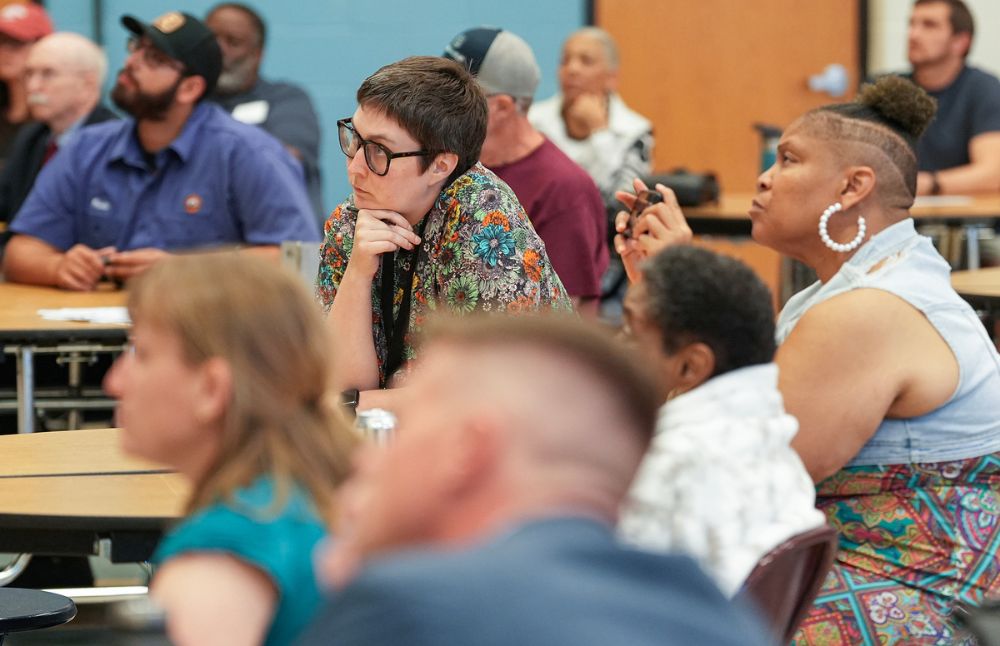
Then, the broadcast cuts to a room full of people at tables. “While police were making drug-related arrests, this room full of people in Indianapolis was focused on helping families and kids dealing with the aftermath of the drug epidemic,” he says. “Overdose Lifeline is a not-for-profit group that works with people in recovery.” Sánchez interviews the nonprofit’s CEO, Justin Phillips, who speaks about the stigma of substance use disorder. The most concrete information in the story is revealed during Sánchez’s interview with Marion County Coroner Alfarena McGinty, who describes the massive drop in drug-related deaths since 2021 and touches on resources available to those struggling with addiction.
I asked the reporter how these stories came together, and Sánchez had plenty of thoughtful answers.
He was assigned to cover the drug raids on the same day he hosted the breakfast fundraiser. He lives in Johnson County, and the Southside is his beat.
He told me he decided to put the two events into a single story to show his audience that both the problem, and efforts to solve it, could happen at the same time, Sánchez said. The fact that they happened on the same day was purely coincidental, he said. He wants the public to know that he did disclose on his public Facebook page that he was emceeing the event for Overdose Lifeline. But the disclosure was missing from his news report on the event.
By gathering expertise from people who were at the breakfast, he said, his intention was to bring more context to the story. “Usually we cover the urban core that is always allegedly on fire,” he said. “In this case, you look at the story again. This is a suburban county dealing with narcotics, like many other counties across our state. I was also trying to broaden out the conversation with the coroner, who was at the event, and then Ms. Phillips, who runs the program. So, I was just trying to give it context and not be shallow.”
Anyone can do a story about cops busting people, but that wasn’t this story, Sánchez said. It was important to him to add this context to the law enforcement ride-along story.
I want to give Sánchez credit for all the things that went right with this story. He doesn’t show cops parading arrested suspects in front of cameras. He doesn’t run a bunch of mugshots of people who were arrested. In making those choices, he avoids much of the harm that TV news stories about crime can inflict on people.
But his story could have been more complete. It did not say how much drugs or the number of guns seized in the raids. Nor does it share arrest trends in our region. This story communicates that law enforcement is actively working to hold criminals to account, while at the same time, community members are working to help those affected by addiction. The data about the drop in drug-related deaths was the most newsworthy fact in the story.
Sánchez’s news director supports his judgment in packaging the two stories together.
“I stand behind how Rafael reports, absolutely,” Hoyt said. “I think talking about an operation designed to target the drug trade in Indianapolis can be an incomplete story, if we don’t talk about the damage that the drug trade does to Indianapolis. We don’t know how you could separate them.”
I find more journalistic value in the reporting from the breakfast than from the law enforcement raids. Showing police raiding homes doesn’t really tell us much about the problems that drugs cause in our communities.
But can a reporter do an objective news story on an organization if he was just on stage helping them raise money? If you’re watching FOX59 and you’ve seen the reporter in this situation, do you think he will remain independent in his news judgment?
Given that the station will send talent to any nonprofit that requests a host for their fundraiser, there doesn’t seem to be a true conflict of interest. Sánchez doesn’t gain anything (other than efficiency with his time) by reporting on a community event where he is also volunteering.
However, he could have easily disclosed in his story that he hosted the breakfast that morning. That would have signaled to anyone who had doubts that he wasn’t trying to hide that fact.
“I think in this case, the harm is that the viewer thinks that this journalist is not impartial,” said Kerwin Speight, Poynter Institute faculty member, who specializes in broadcast journalism. “I think as journalists, it’s important that when we are covering issues, we make it clear who are all the parties involved, what are all the sides and report on them fairly.”
Speight’s only concern is that the reporter could have enhanced the story by explaining that he hosted the breakfast he was reporting on. He agrees that there isn’t a true conflict of interest in this case, but more the appearance of a conflict.
“Where news outlets can get into trouble is if the journalists who covered the organization are also on the organization’s board of directors or leadership team, or are a donor,” Speight said. This would present an obvious conflict of interest.
I asked CJ Hoyt how FOX59 would respond if a negative story came to light about an organization that a reporter had covered and also had ties to, and here’s what he said:
“We would handle it like we would handle any other story. There’s no consideration given just because talent happened to have had an appearance at one of their events, it doesn’t impact our coverage decisions at all.”
News consumers are flooded with information, and they often struggle to know which sources are trustworthy. The journalists working in the newsrooms that serve the Indianapolis market often assume that viewers and readers inherently trust them. But that’s not always the case.
When journalists explain how they make their decisions, including why they cover certain stories, or interview particular sources, or even why they ask specific questions, people are more likely to trust that the information in a story was independently reported for their benefit.
Sánchez’s story would have been stronger if he had told viewers that he started his day helping an addiction recovery organization raise money and that shaped his reporting on the SWAT team drug raids. It would have explained why he combined the unrelated events into a single story.
Transparency is a habit that newsrooms should embrace, because it builds connection with their audiences. As our local news landscape shifts, these small gestures will go a long way toward building public trust among the community that journalism promises to serve.
Tracey Compton is Poynter’s Indianapolis Public Editor. You can send your questions about local media to her at indypubliceditor@poynter.org.
Mirror Indy publishes the Indianapolis public editor columns as part of a partnership with Poynter Institute to increase media literacy and trust in local journalism.