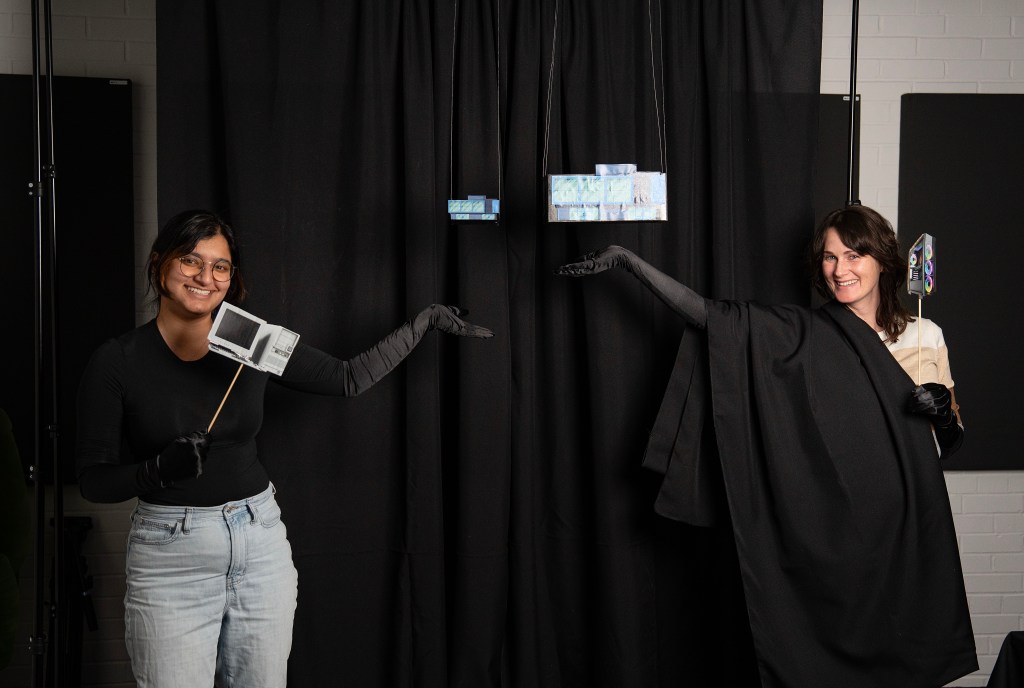
When I began Queer Circle City, my mission was to connect the community to people, places and events in our history. What I am constantly amazed by are the places that offered a safe space, education or simply a dance floor in the midst of 20th century homophobia or during the onset of the AIDS epidemic.
These five places existed in those times. From a Victorian house in the Old Northside to a bathhouse blocks away from the Indiana Statehouse, the bygone locations not only stood as a testament to the LGBTQIA+ community, they were instrumental to our basic survival and a blueprint to understand our rich, indelible history.
1. The Body Works, 303 N. Senate Ave.

From 1977-1988: The Body Works was started by Stan Berg in late 1977, blocks away from the Statehouse. The simple bathhouse quickly grew into a vinyl store, bookstore, discotheque and hub for THE WORKS magazine (1981-1990). Berg was a force of nature in the LGBTQIA+ community, splitting his efforts between The Body Works and advocacy outside of its walls, such as Gay Knights on The Circle, which promoted an end to police harassment of gay and lesbian women on Monument Circle.
The Body Works became instrumental in education in and out of the community at the very beginning of the HIV/AIDS epidemic. It created a pamphlet, “What Every Gay Man Should Know About AIDS,” that circulated the state before any government-issued information.
Bell Flower Clinic staff members also toured the bathhouse to gain more understanding. Through THE WORKS magazine, monthly information on HIV/AIDS was distributed to thousands of people.
Led by Borg, the Body Works continued to host events, dance parties and a store for gay men. While the building is gone, the concept is credited with saving lives, building culture and creating a trail of history we reap rewards from to this day.
2. Club Bette K, 1808 N. Central Ave.
From early 1960 to late 1970s: The story of Club Bette K begins with two lovers, Bette Jo Keller and Darlo Evans, who opened a lesbian and gay bar on the Eli Lilly and Company grounds in the late 1950s. After almost a decade there, Evans retained the bar and Keller opened Club Bette K in the early 1960s. It began as a dive bar for mostly gay and lesbian women then at some point in the early ’60s, turned into an open stage for drag shows.
Keller is known as a fierce advocate for gay and lesbian women, allegedly bailing them out of jail when they were accused of “indecent exposure.” In a 1974 profile of Indianapolis gay life in CIAO! Magazine, they stated, “I don’t suggest that you call her if you get into trouble with the vice squad, but I would stress she has been very cooperative in the past. Like Darlo’s, this place is a favorite with women, but some gay guys still think of it as the only gay bar in the city. One of the older bars.”
Club Bette K was a safe space tucked away in a quiet neighborhood that predates most places when it comes to drag. It is where many famous queens got their start and paired with the leadership of Bette Keller, it preserved growth for decades to come.
3. The Famous Door, 252 N. Capitol Ave.

From early 1960s to late 1970s: Known as a “mixed crowd,” meaning both gay and straight people, the Famous Door was a high-end drag and showbar across the street from the Indiana Statehouse. One of the first places catering to a gay clientele and owned by a gay man, Max Hansborough, the bar was known as black-tie with a large, red “famous door” towards the stage.
Several iconic queens from Indianapolis and Chicago performed there. It was also known to put on shows featuring both Black and white queens along with a diverse crowd.
A 1974 profile in CIAO! magazine said, “… it attracts all types. Hustlers, rough trade, drags — the whole gay spectrum. Its drag shows are very popular, and some very nice types drift in and out.”
Historically, it helped make drag performances in the city more mainstream and exposed straight clientele to the culture. It was also an early hub for Black queens to get their start. Hansborough eventually moved The Famous Door to a location further north and then started a gay bar on 16th Street called Jackie’s. His efforts to enhance gay nightlife in the city further cultivated safe spaces and the culture well into the 1970s, during a gay renaissance across the country.
4. Shirley’s, 1341 N. Capitol Ave.

From late 1970s to early 2000s: The longevity and evolution of gay bars at a single location in Indianapolis is not uncommon. Where one bar ends, another one takes its spot, as is the case of 1341 N. Capitol Ave., which has seen four bars come and go throughout the decades.
Shirley’s began as the premiere lesbian bar — a rarity in a city that largely catered to white, gay men. It then transitioned in the early 1980s to Shirley’s One Way, moving to a crowd of gay men and lesbian women. Shirley and the bar were early supporters of the Bag Ladies, at one point raising almost $2,000 in one night for the organization during the onset of the AIDS epidemic.
The dive bar allowed both gays and lesbians to feel safe and congregate at the height of the HIV/AIDS epidemic and paved the way for more lesbian bars in the city.
The building was Shirley’s/Shirley’s One Way for many years before becoming Tubes — a gay bar styled after Sidetrack in Chicago. It eventually became Club Cabaret, an iconic drag and showbar that lasted many years.
5. 501 Tavern, 501 N. College Ave.

From early 1980s to late 2010s: Terry Frames founded 501 Tavern as a leather bar in 1984. It is one of the few examples of a bar centered around the leather community in America, and it ran for almost 30 years. Frames was the owner from 1984 to 1995.
“Many, many people that were regulars would tell you 501 was a family to one another,” Frames said. And it is true, the bar became a bit of a community within a community.
Nationally, leather bars came onto the scene when gay men in traditional leather garb took over straight bars that were either flailing or in the process of being sold. Subsequently, a dying straight bar would then gradually turn into a gay leather bar due to regulars frequenting it. This was not the case for 501 Tavern, which started and ended as a leather bar for over 30 years, which was unique in the early 1980s. It was the only fetish bar in the city, and no other location has been able to pull that off.