The Pennsy Trail has been part of Megan Lapa’s life since she moved to the south side of Irvington in 2018. She regularly bikes or takes her dog on walks along the trail steps from her home.
So when she heard the possibility of a $2 billion data center campus being developed along the Pennsy, she started researching.
At first, Lapa said she thought the data center proposed by Georgia-based developer DC Blox might be a good fit for the 150-acre industrial park near South Kitley Avenue.
The property is already zoned for industrial use, and DC Blox has shared commitments promised to the community on their website. The developer has agreed to pay for energy infrastructure improvements needed for the data center and pledged to use local labor unions for its construction. The company also said it will donate money to help maintain the Pennsy Trail.
But as Lapa kept digging, her feelings about the development quickly changed.

The site for the proposed data center, once a Ford factory, is also a brownfield, creating concerns about the environmental impact of digging up contaminated soil during construction. Noise is also a concern, specifically with the 56 diesel generators that will be on site. DC Blox representatives said the generators will only run once a month during testing. Still, the site is right across from Irvington Community Elementary School and some worry about the impact both the noise and environmental pollution could have on students.
Lapa believes the company’s community commitments and protections are too thin.
“I dug more into the status of that brownfield and realized they weren’t just thin, they were completely inadequate,” she said.
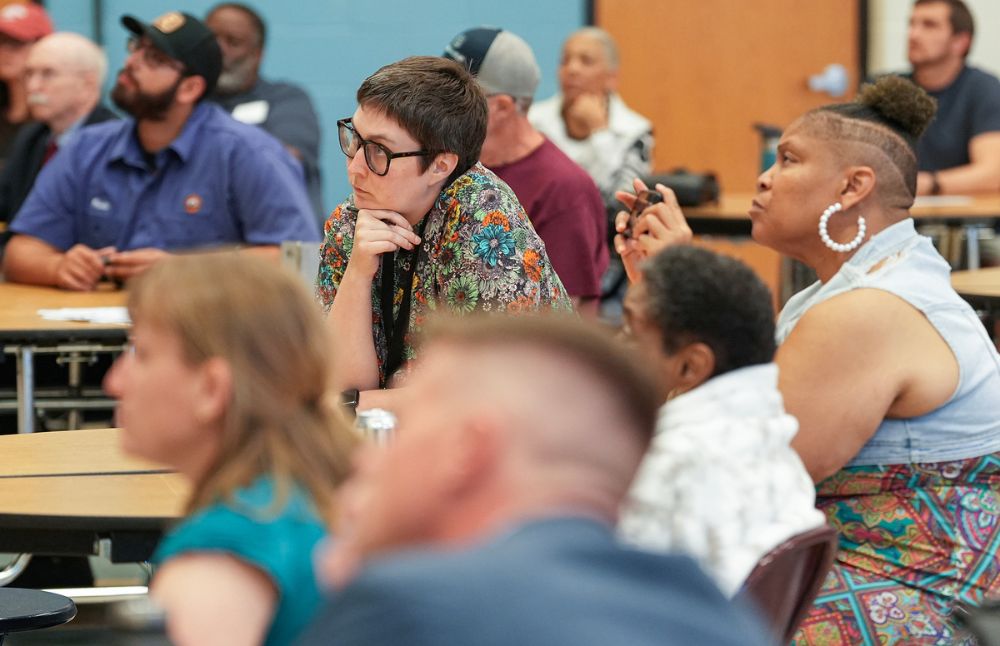
She isn’t alone. Other eastsiders are also unsure about the project. In May, dozens attended a 3 hour community meeting with DC Blox hosted by Republican City-County Councilor Michael Paul Hart. The property sits on the border of two council districts — Hart’s and Andy Neilsen’s, the Democratic councilor for District 14.
But neither Hart nor Nielsen actually have much power over the project’s approval, another source of frustration for neighbors. DC Blox is asking the city’s Metropolitan Development Commission for approval of a use variance, not a rezoning, which means the City-County Council can’t override the MDC’s decision.

“Something that impacts the quality of life of the people you represent, you should have a meaningful voice at the table, and that’s been taken from both councilors at this point,” Lapa said.
Elected officials still weighing support
Although the property’s address is in Hart’s district, Nielsen also hosted a town hall in April with DC Blox reps and residents.
“Within a half mile of the site, there are over 1,700 residents in District 14 and 53 residents of District 20,” Nielsen said. “Councilor Hart and I have obviously had conversations about this because I want to be respectful that this is physically in his district. But I’m hearing about this a lot.”

Nielsen created a survey for residents to share their thoughts on the project. He said constituents recognize the project could come with some benefits. But, he said many feel the concerns outweigh the benefits.
Nielsen told Mirror Indy he is undecided on whether he supports the data center. He said he will wait until he analyzes and publishes the survey results to make his decision known.
Get the backstory

Still, Nielsen said it is important the community drives what is being developed in their neighborhood. And he acknowledged that the zoning process DC Blox is pursuing makes it harder for residents to do that. He encourages residents to stay informed and attend public meetings.
“It’s still about making sure our voice is heard,” Nielsen said, “It’s about communicating with the MDC. Nothing is over until it’s over. We need to be focused on representing our constituents, having open dialog with DC Blox and their representatives and being transparent.”
Hart is also undecided on whether he supports the development. He did not support another proposed data center in his district last year. Google, the developer behind that project, withdrew its proposal before councilors could take a vote on it.
But Hart said there is a difference between the Google data center and DC Blox. He said he’s heard from residents who disagree with the DC Blox development, but has not seen as much organized opposition like he did in Franklin Township last year.
While the council may not get to vote on whether or not the data center campus is built, Hart said councilors still have a say in any incentive packages DC Blox will receive.
“That’s where we have the ability to try and make sure that we get what the community is asking for,” Hart said.
Environmental concerns
In 2022, the former Ford Visteon plant was purchased by real estate agencies Lauth Group and Covington Group and turned into the Thunderbird Commerce Center, an industrial park.
At Hart’s town hall last month, some residents told DC Blox they were worried about air pollution while the data center is being built. One resident remembers the neighborhood being covered in dust during the construction of one of the buildings currently occupying the industrial park. They don’t want that to happen again.

Others said they were worried about groundwater contamination and asked how the company will mitigate contaminated soil.
According to a September 2025 letter from the Indiana Department of Environmental Management, chlorinated solvents were used throughout the history of the Ford plant. In the letter, IDEM said there are still harmful chemicals in the ground that the state is monitoring. One of the chemicals, vinyl chloride, is associated with an increased risk of liver, brain and lung cancers.
“They’re being reckless and irresponsible, and straight up disrespectful to the people who live here, and these kids that are going to school across the street,” Lapa said.
When asked about the environmental concerns, Bill Thomson, vice president of marketing for DC Blox, told Mirror Indy the company will follow best practices and local regulations when it comes to working with potentially contaminated soil.
After all her research, Lapa said it’s difficult to say whether she supports the data center or not. Right now, her main concern is the brownfield.

“I think it’s like an ethical failure to not do the right thing here, which is to take care of that,” she said.
Ideally, Lapa would like to see the toxins in the soil be remediated. She thinks the land could be used to benefit the community, like extending the school’s outdoor spaces. She said development is not remediation.
“If that place has to be developed, I think I’d rather have a data center than a truck yard,” Lapa said. “I don’t want any of it, though.”
What’s next
The project will be heard by the Metropolitan Development Commission’s hearing examiner 1 p.m. June 11 at the City-County Building. The hearing examiner will then make a recommendation to the full eight person MDC.
Mirror Indy, a nonprofit newsroom, is funded through grants and donations from individuals, foundations and organizations. Sign up for our free newsletters.
Mirror Indy westside reporter Enrique Saenz contributed to this article.
Mirror Indy reporter Darian Benson covers east Indianapolis. Contact her at 317-397-7262 or darian.benson@mirrorindy.org. Follow her on X @HelloImDarian or on Bluesky @darianbenson.bsky.social.