Indianapolis voters will decide whether to approve a tax increase this fall to support the city’s district and charter schools following a Monday vote by the Indianapolis Public Education Corporation.
The newly-created board that oversees key aspects such as finances of local schools voted unanimously to place an operating referendum of 37 cents per $100 of assessed value that is projected to generate around $90 million in annual revenue on the ballot. It will mean asking voters to cover around $221 more on their annual tax bills on a typical $150,000 home at a time of increasing living costs.
But it could be a lifeline for Indianapolis Public Schools to avoid significant cuts to staff and programs or even a state takeover. The revenue will also benefit charter schools that enroll students living within the IPS district and choose to participate in the referendum.
Half the referendum revenue, or $43.9 million, will go to IPS and $43.9 million will go to around 60 charter schools that have signed up to participate in the referendum.
IPEC acting Executive Director Michael O’Connor acknowledged that the referendum won’t be enough to cover the district’s budget deficit, and will likely require Indianapolis Public Schools to make $20 million in cuts by 2027-28, in addition to the $24 million in cuts already announced this year. The board is also counting on more cost-sharing with the district’s innovation schools, as well as an increase in the state funding IPS receives for special education and English language learner education, to shore up the district’s budget.
In a statement, IPS Superintendent Aleesia Johnson said that though the board’s referendum rate was less than the district sought, she urged voters to support it.
Referencing the further cuts, Johnson said, “We will approach these difficult decisions with thoughtfulness, intentionality, and open communication with our community. Those considerations will begin immediately because we know our students, staff, and families are counting on us.”
The body had multiple referendum options to choose from, including renewing the current referendum at 19 cents per $100 of assessed value or a much higher rate of 55 cents, but ultimately chose a middle ground, said O’Connor.
“We heard from people who are on fixed incomes and who worry very much about what any tax increases would mean to them. We heard from owners of property who worried that their renters couldn’t afford an increase in taxes,” said David Harris, chair of the board in opening comments. “At the same time, we heard from a lot of people who were very worried that we make sure our kids have the resources that they both deserve and are entitled to.”
Board member and IPS board president Hope Duke Star publicly proposed a higher 42 cent referendum to save IPS from more drastic cuts, but the proposal was voted down.
“The amount will be too high for many, too low for many others, but will allow the education system we are tasked with overseeing the ability to operate, make decisions about right-rizing and streamlining in an orderly fashion,” O’Connor said.
Indiana lawmakers this year created the mayor-appointed IPEC to manage referendums, transportation, and accountability for these schools, shifting power away from the elected IPS board.
The fall referendum is the body’s first significant act. It will last four years, rather than the typical eight years. O’Connor said this move would be “best for all,” allowing IPEC to implement a transportation system in year two and a facilities plan in year three. The IPEC board will also set an operating levy in October to fund operating expenses, like transportation, O’Connor said. The sharing of this funding between IPS and charter schools will be rolled out incrementally per state law.
Comments from the public — and especially from charter leaders and advocates — were largely supportive of passing a referendum.
“The outcome goal is all children,” said Felicia Glinsey-Butler, assistant principal at Vision Academy at Riverside, a charter school.
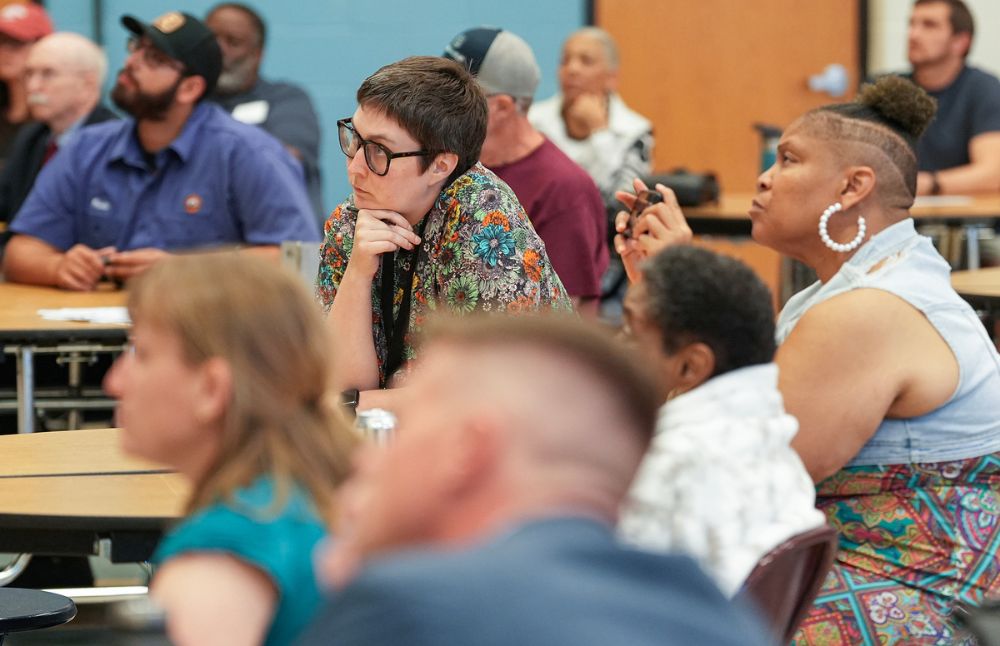
But speakers also expressed frustration that the power to levy a referendum was taken away from the elected IPS board. They asked the IPEC board to ensure transparency for the tax revenue.
“We need a place we can go to see where every single penny of this referendum is going,” said Monica Shellhammer, an IPS third grade teacher.
The referendum will likely be one of several dozen proposed to voters across the state this year, as school districts grapple with caps on property tax revenue and changes to the referendum process.
The next step is for IPEC to send its ballot question to the state Department of Local Government Finance. The department then has until noon Aug. 1 to decide if it’s approved.
IPEC is scheduled to meet again on July 22.
This article was written by Chalkbeat Indiana reporter Aleksandra Appleton.